Fantasy worlds are built from words. Place names, spell descriptions, item lore, quest dialogue and menu labels all have to feel like they belong to the same universe, and players quickly notice when they do not. When a studio takes its game to new markets, that universe must be rebuilt in every language. Choosing the right translation tool at the beginning of the process decides whether this is a smooth part of production or a constant source of delays.
Why game text is different
Game text is not like a manual. Strings are short, they appear in unexpected places, and many of them contain variables such as player names, numbers or item types. A line like "You found three swords" may be built from separate pieces that are assembled by the game engine. Without context, a translator cannot know whether a word is a noun or a verb, singular or plural, and the result can be grammatically wrong in languages that have more complex rules than English.
Context is the most valuable feature
The most useful thing a platform can give a translator is context. Screenshots, character names, scene descriptions and notes about tone all help to turn a literal translation into a convincing one. A good best translation tool lets developers attach this information to each string and lets translators ask questions directly in the editor. The investment of a few minutes in context saves hours of corrections after the first playtest.
Protecting variables and tags
Placeholders and markup inside strings must remain untouched. A single deleted bracket can make text appear as raw code on screen, or even crash a build. The platform should highlight these elements and prevent accidental edits. Automatic checks should also verify that every placeholder in the source appears in the translation, because some languages need to reorder them and mistakes are easy to make.
Consistency across a whole universe
Fantasy settings rely on invented vocabulary. The name of a kingdom, a magic school or a legendary weapon must be identical everywhere, from the opening cinematic to the last patch note. A shared glossary records the approved version of each name and explains whether it should be translated or kept as it is. Translation memory adds another layer by reusing repeated phrases such as combat messages and tutorial hints, which keeps the voice stable across thousands of lines.
Choosing between platforms
The market is full of options, and many teams start by comparing the best-known names. If you are already looking at one particular vendor, a review of the main Lokalise alternatives can help you understand what else is available and how features and pricing differ. The right choice depends on the size of your team, the engine you use and how many languages you plan to support.
Working with machine translation carefully
A machine translation tool can be useful for early builds, internal testing and low-risk text such as system messages. For story, humour and character voice, human translators should lead. The best workflow lets you use machine drafts as suggestions inside the same editor, with the glossary and memory taking priority, so approved names are never replaced by a machine guess.
Plural forms and locale rules
Languages handle plurals, genders and number formats in very different ways. Some have two plural forms, some have six. Dates, currencies and sorting rules change as well. The Unicode community maintains shared data about these rules, available through the Unicode CLDR project, and good tools build on that data so developers do not have to reinvent it. Make sure your platform supports plural variants properly, or your players will see strange sentences.
Fitting into the development pipeline
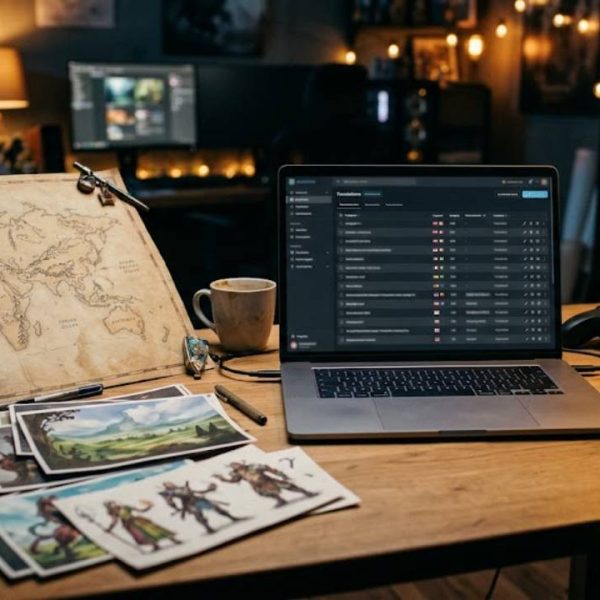
Game studios work in short cycles, with builds every day and content changing constantly. Your translation tool should connect to your repository or build system, so new strings are detected and sent out automatically and finished translations return without manual copying. A clear status view lets producers see which languages are ready for a release and which are still waiting for review.
Testing in the game itself
Translation is not finished until the text has been seen in the game. Some languages need much more space than English, and a menu that looks perfect in one language may overflow in another. Plan time for language testing, give testers an easy way to report problems and feed their findings back into the platform so that the next update benefits from them.
Managing freelancers and community help
Many studios rely on a mix of agencies, freelancers and sometimes community volunteers. A shared platform makes this manageable, because each person can see only the strings and projects they need. Roles and approval steps ensure that community contributions are reviewed before they reach players. A short style guide and a list of names in each language help new contributors to start well.
Final thoughts
A game is only as immersive as its text, and a translation tool is what keeps that text coherent across languages. Look for context support, protection for variables, a strong glossary and a workflow that fits your release rhythm. Test with a real slice of your game before you commit, and the world you built will feel just as alive to players in every language.